
Technical classification, normative limits, and why pressure-resistant enclosures are not a mobile concept
1. Classification: What an Ex-enclosure is – and what it is not
An explosion-proof enclosure isnot an explosion-proof device, but part of arated overall system.
Explosion protection is created solely by theenclosure, not by the operating equipment used.
Normatively, it is crucial:
The complete system is evaluatedNot the individual device inserted
The ignition source may be present,
Die Zündquelle darf vorhanden sein, must be safely enclosed or controlled
➡️ The equipment inside remains technicallynot explosion-proof.
2. Relevant types of ignition protection for Ex enclosures
Ex d – Flameproof enclosure
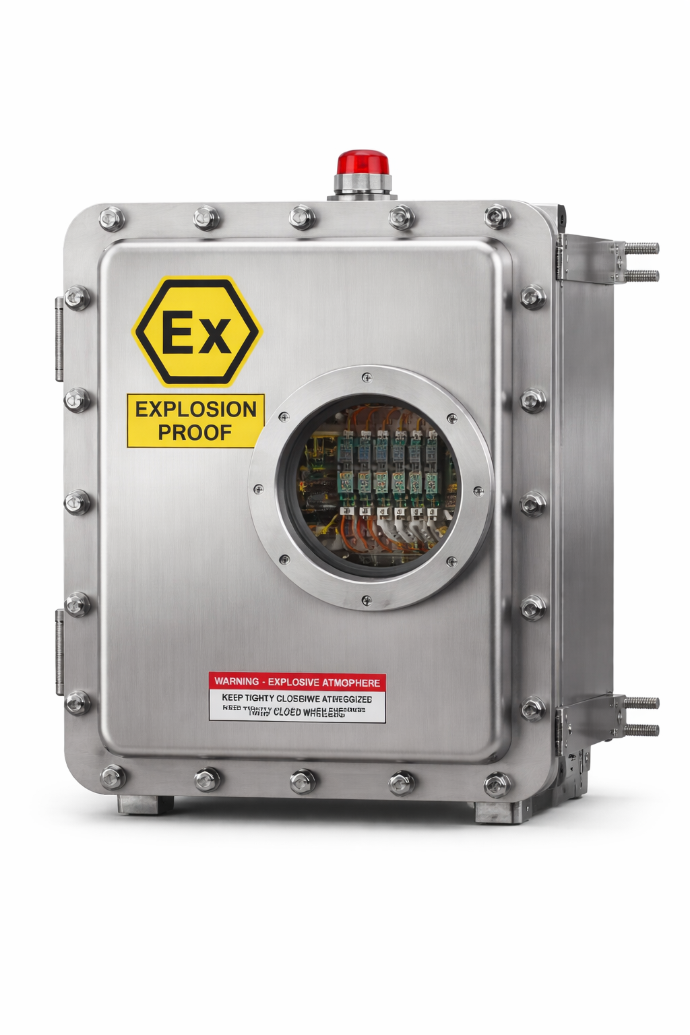
Internal explosion permissible
No flame or pressure transmission to the outside
Robust construction is mandatory
Opening in explosion hazard areanot permitted
Normative basis (safe):
EN IEC 60079-0 – General requirements
EN IEC 60079-1 – Flameproof enclosure "d"
Ex p – Pressurized enclosure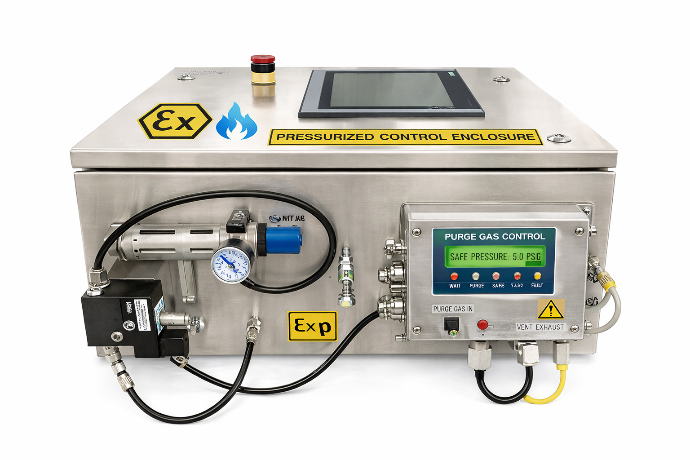
Protection through purging / overpressure
Continuous monitoring required
Dependence on power supply and sensors
Increased organizational and technical effort
Normative basis (safe):
EN IEC 60079-0
EN IEC 60079-2 – Pressurized enclosure "p"
Ex e – Increased safety (only supplementary)
For terminals, connections, passive components
No active ignition sources
No independent protection concept for electronics
Normative basis (safe):
EN IEC 60079-7 – Increased safety "e"
➡️ In practice, these types of ignition protection are oftencombined, which makes planning, assessment, and operationmore complex, not easier.
3. Thermal behavior – the critical point
Non-explosion-proof devices arenotdesigned for:
defined maximum surface temperatures
worst-case loads
failure case considerations in the Ex environment
.
In the Ex enclosure, the boundary conditions become more stringent:
restricted heat dissipation
heat buildup
local hotspots (CPU, charging electronics, power supplies)
➡️ Thetemperature class (T-class)always applies to theentire systemand must beproven through measurement.
Normative basis (safe):
EN IEC 60079-0 – temperature limits and testing requirements
4. Stationary applications – normatively and practically sensible ✅
Typical applications:
control and switch cabinets
industrial PCs
power supplies, inverters
cameras, radio and measurement technology
Why Ex enclosures work here:
fixed installation
no operator access in the Ex area
enclosure remains closed
maintenance only in a cleared environment
➡️ Forstationary applicationsEx enclosures are state of the art and normatively manageable.
5. Mobile applications – this is where the problems arise ❌
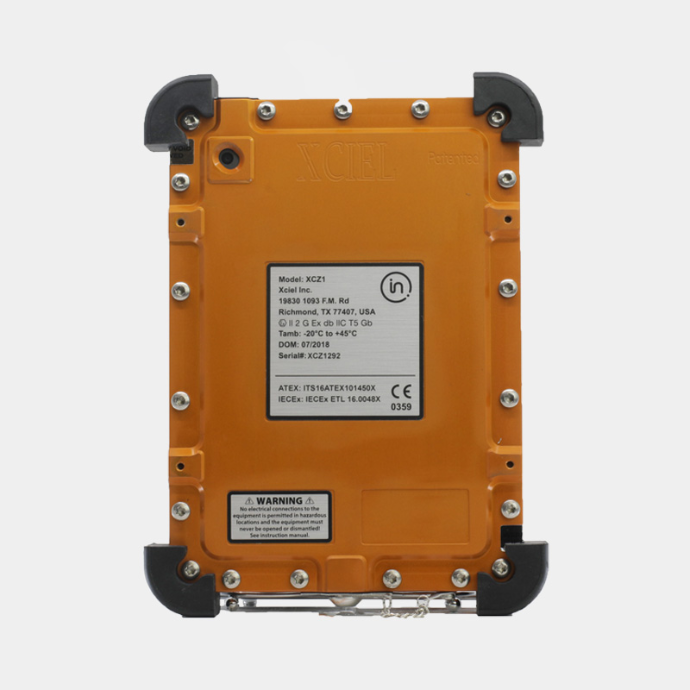
The central question:
Who actually wants to carry and operate a pressure-resistant enclosure?
The factual answer:
Pressure-resistant enclosures are not designed for mobility.
6. Why Ex-d is not a mobile concept by design
A pressure-resistant enclosure requires:
thick-walled housings (aluminum or stainless steel)
massive flanges
long ignition gaps
screwed covers with defined torque
Consequences:
high weight (often several kilograms)
bulky design
limited ergonomics
Opening only with tools
Opening in the Ex area is not permitted
➡️ "Portable" here usually means:theoretically transportable.
7. Opening and battery replacement in the Ex area – correctly classified
It isnot standard, that explosion-protected devices may be opened or the battery replaced in the Ex area.
On the contrary:
Most Ex devicesare designed so thatbattery replacement
occurs outsidethe Ex areathe device in the Ex area
remainsclosedThat is:
normatively permissible
operationally common
safety-wise sensible
The few exceptions
There are
a few specially designed Ex devices, where:battery replacement or defined opening procedures are allowed in the Ex area.
Battery replacement or defined opening procedures are permitted in the Ex area.
These exceptions require:
intrinsically safe energy concepts
constructive separation of ignition sources
increased testing and certification effort
➡️ They arethe exception, not the rule.
8. The systemic difference to Ex enclosures
The crucial difference remains:
InEx devicesthe opening or battery replacement conceptis part of the certification
InEx enclosuresany opening in the Ex area is fundamentally prohibited, because:, da:
the inserted device is not explosion-protected
the explosion protection is solely created by the encapsulation
➡️ This is not a detail, but afundamental system difference.
9. Operator responsibility and organization
The use of an Ex enclosure for mobile or user-interactive applications shifts responsibility:
from the manufacturer
to the operator
With consequences:
detailed risk assessment
operating and work instructions
training obligations
increased liability risk
Legal framework (safe):
ATEX Directive 2014/34/EU (devices)
BetrSichV (DE) – operator obligations
TRGS 720 ff. – explosion protection (DE)
10. Objective comparison
| Criterion | Ex enclosures | Ex-device |
|---|---|---|
| Stationary use | ✅ | ✅ |
| Mobile use | ❌ | ✅ |
| Opening in the Ex area | ❌ | ⚠️ usually not |
| Battery replacement in the Ex area | ❌ | ⚠️ rarely |
| Opening concept certified | ❌ | ✅ |
| Ergonomics | poor | practical |
| Operator effort | high | moderate |
| Normative robustness | limited | high |
⚠️ = only for devices specifically approved for this purpose
11. Technical conclusion
Ex-protected enclosures arenot a substitutefor explosion-protected devices, but astationary protection concept.
Meaningful, when:
stationary
closed
monitored
clearly organized
Critical, when:
mobile
user-interactive
frequently opened
thermally demanding
Pressure-resistant enclosures are designed to stand still – not to be carried.
Those who need mobility do not need an Ex enclosure, but a real explosion-protected device.